

What Actually Happens to Business Metrics When "Hold Time" Hits Zero?
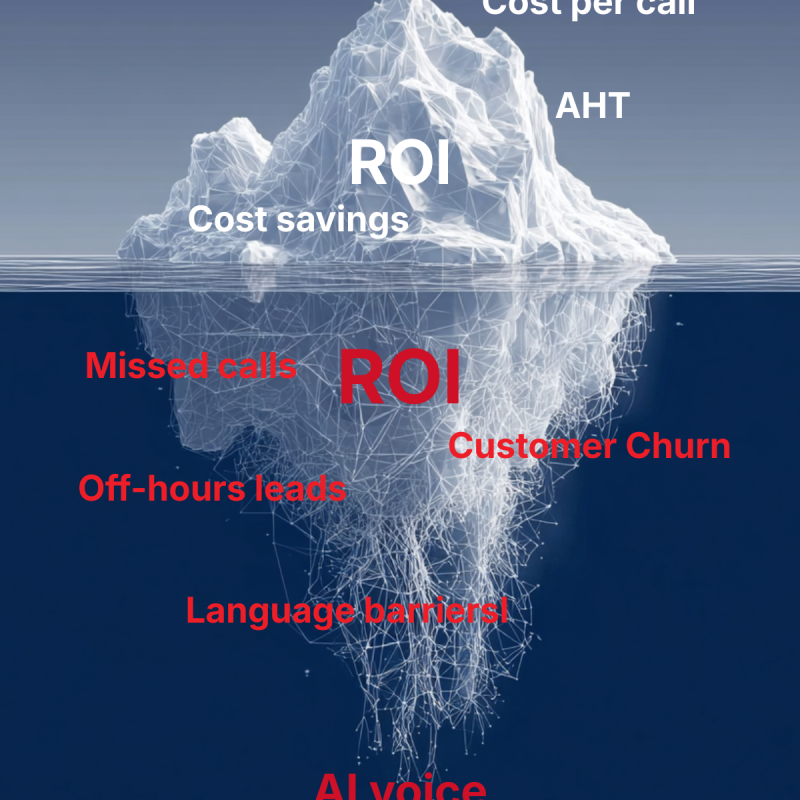
When companies decide to deploy Voice AI (like BuildIVR), the initial business case is almost always built around operational efficiency. The goal is simple: reduce the cost per call.
However, after analyzing data from successful deployments, we have observed that cost savings are often just a secondary benefit. The primary impact shows up in three key metrics that go far beyond simple automation.
Here is what actually happens to a business when the concept of "waiting on hold" is eliminated.
1. The CSAT Paradox: Why Speed Beats "Human Touch"
There is a long-standing belief in customer service that humans always prefer humans. But the data reveals a counter-intuitive truth we call The CSAT Paradox.
For routine tasks, customers often rate AI interactions higher than human ones.
Why? because for transactional queries—like password resets, delivery tracking, or booking an appointment—speed is the highest form of empathy.
When a customer calls with a simple problem, they don't want a conversation about the weather. They want a solution.
- Human Agent: 3 minutes hold + 2 minutes pleasantries + 1 minute solution = 6 minutes total.
- BuildIVR Agent: 0 minutes hold + 30 seconds solution = 30 seconds total.
For the modern consumer, "Immediate Resolution" is valued higher than "Human Conversation."
2. Plugging the Revenue Leak (Lead Capture)
In competitive B2B and service markets, "calling back later" is not a strategy. It is a lost opportunity.
If a potential client calls your sales line and hits voicemail, they rarely leave a message. They hang up and dial your competitor immediately. This is Revenue Leakage.
Voice AI captures intent at the exact moment of interest. It ensures that every inbound lead is qualified, logged, or booked instantly, 24/7.
- It doesn't matter if it's 2:00 AM.
- It doesn't matter if your sales team is at lunch.
- It doesn't matter if it's a bank holiday.
The AI stops the bleeding of leads, transforming missed calls into pipeline revenue.
3. Support Capacity Elasticity
Human teams have fixed bandwidth. If you have 10 agents, you can handle 10 calls. The 11th caller waits.
AI bandwidth is elastic. Whether you receive 5 calls or 500 calls simultaneously (during a marketing spike or a service outage), the response time remains constant: Zero.
This has a surprising positive side effect on human staff: Improved Morale.
When an AI handles the volume spikes and the repetitive FAQ noise, human agents aren't overwhelmed. They don't face a queue of angry customers who have been waiting for 20 minutes. Burnout decreases, and retention improves because humans are left to do what they do best: solve complex, emotional problems.
The Core Observation
Implementing Voice AI doesn't change what you sell. It changes how accessible you are to buy from.
It represents a fundamental shift in business philosophy:
- From: "We will respond when we can." ⏳
- To: "We are always ready when the customer is." ⚡
At BuildIVR, we design our agents not to replace people, but to remove waiting, friction, and silence from phone communication.
The Question for Leaders
As you look at your KPIs for the next quarter, ask yourself:
If your company went from a 3-minute average hold time to zero tomorrow—which business metric would change first?
Would it be Cost? Revenue? Customer satisfaction? Or Team retention?
The answer might surprise you.